
When you’re evaluating customer service platforms, the chat widget is often the last thing your team scores. Yet it’s usually one of the + Read More about ada and wcag compliance features to look for in a customer service chat platform rfp
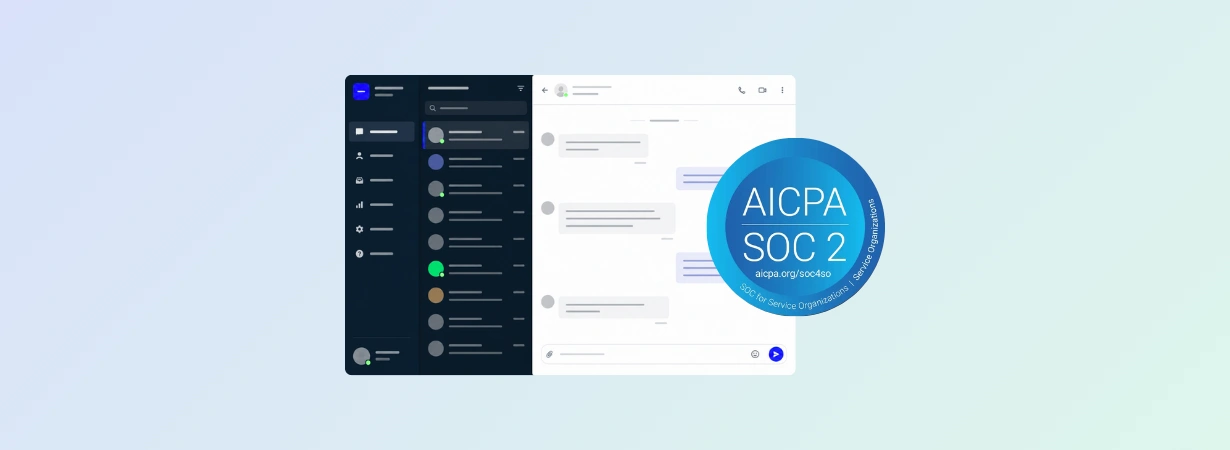
SOC 2 Type II Compliant Live Chat Software: What You Need to Know
You want to provide the best and most accessible service to your customers, so you offer live chat support to provide quick, accurate and personalized answers to their questions.
But even in a world of instant satisfaction, it’s important to take a moment and make sure that your live chat software provider has taken the necessary measurements to keep your customers’ sensitive information safe. Some industries like banking and healthcare have especially strict rules, but every organization is liable should a preventable leak occur.
There are many certifications, both voluntary and mandatory, that live chat software providers have to offer. A voluntary compliance that many organizations should have is SOC 2 Type II. With a SOC 2 Type II certified live chat software, you can sleep well at night knowing that your customer’s data is secure.
What Is SOC 2 Type II Compliant Live Chat Software?
The American Institute of Certified Public Accountants (AICPA) established the SOC 2 protocol in 2010. They define it as a “report on controls at a service organization relevant to security, availability, processing integrity, confidentiality or privacy.”
In other words, to be SOC 2 certified, live chat software providers need to undergo a professional annual audit of their documentation and control framework – including cybersecurity policies, technical tools, and how they control access to their resources (among other, how they control access to your customers’ sensitive information).
In this context, a service organization isn’t only a company that provides traditional services, like legal or accounting. A SaaS company is considered a service organization too. It just provides software as a service (SaaS). Most companies use live chat software in this SaaS model, meaning their live chat software providers are eligible for SOC 2 certification.
SOC 2 Type I vs. SOC 2 Type II: What’s the Difference for Your Live Chat Software?
Like other service organizations, live chat software providers can be certified under two SOC 2 protocols. Each requires a different type of audit and, results in a different type of report.
SOC 2 Type I Means Your Live Chat Software Provider Did a Good Job at the Specific Time of Auditing
A SOC 2 Type I audit looks at how your live chat software provider handles cybersecurity at one specific point in time.
However, there is no assurance it handles it well over time. It might be doing great, and it might have had it employees working overtime in the last minute to pass the audit.
SOC 2 Type II Means Your Live Chat Software Provider Has Been Continuously, Efficiently Cybersecure for a Long Period
If your live chat software provider holds a SOC 2 Type II report, it means an independent auditor watched its security controls operate over a stretch of time, not just on one day. Type II reports usually cover 6 to 12 months. There’s no hard minimum, but auditors generally treat anything under six months as too short to prove a control actually works in practice.
Generally, the entire process for Type II, including preparation, can take a year, versus only 3 months for Type I. Type II is a much deeper, more thorough auditing procedure. It signifies the provider has put some processes in place to be able to deliver high-quality cybersecurity over a long period of time. Not only that, but the audit ensures the implemented policies, processes and technologies have been proven effective over time.
What SOC 2 Type II Means When Your Live Chat Runs on AI
When this protocol was written, live chat meant a human agent typing replies. That’s no longer the whole picture. A lot of front-line support now starts with a bot, and a SOC 2 audit that only looks at human chat transcripts misses where most of the data actually moves.
Think about what an AI layer touches. An AI Agent reads the customer’s question, pulls an answer, and sometimes acts on the account. An AI Copilot sits beside a human agent, drafting replies from past conversations and account data. AI Knowledge retrieves content to answer with, and AI Insights analyzes conversations after the fact. Every one of those steps handles the same sensitive data a human agent would, and often more of it at once.
So the questions a buyer should ask have changed. Where does the conversation data go once the bot has it? Is it used to train a model, and if so, whose model? Who can see the retrieved knowledge and the analysis built on top of it? A SOC 2 Type II report that covers the AI features, not just the chat window, is what tells you those controls are being tested over time rather than promised in a sales call.
The short version: if your provider’s AI handles regulated data, the audit needs to reach the AI. Ask whether the scope of their report includes the automation, or stops at the chat transcript.
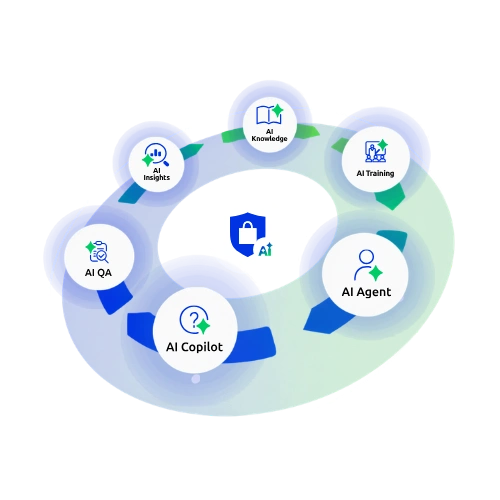
See How Comm100 Protects Data Across Its AI Suite
Learn how Comm100 applies the same security, encryption, access control, and compliance standards across AI Agent, AI Copilot, AI Insights, AI Knowledge, and the rest of the platform.
Explore AI securityAI Security
Why Your Company Needs SOC 2 Type II Compliant Live Chat
Not every company needs its live chat to be SOC 2 Type II compliant. But a lot do.
If your chat reps only answer general product questions or opening hours, you may never touch sensitive data, and SOC 2 Type II matters less. But the organizations we work with rarely have that luxury. The stakes look different depending on the industry:
- iGaming operators handle KYC and AML checks, payment details, and player identity data inside support conversations. A leak isn’t just embarrassing, it’s a regulatory fine.
- Higher education support teams move student records, financial aid details, and data pulled from the SIS or LMS through Live Chat and SSO connections. Student privacy expectations are high and rising.
- Banks and credit unions layer SOC 2 on top of PCI DSS, and they move slowly and deliberately when vetting any vendor that will see account data.
- Healthcare organizations carry HIPAA obligations on every message that contains patient information.
- Government teams handle citizen data across Ticketing & Messaging and chat, often under public-records and procurement scrutiny that few private companies face.
In each of these, the person vetting your software is usually in IT or security, and SOC 2 Type II is one of the first boxes they check. Anyone whose agents handle passwords, account details, or identity data should care about how their software provider protects it.
SOC 2 Type II doesn’t guarantee there will no breaches, but it does mean your live chat service provider has gone above and beyond to secure you and your customers. It’s a strong vote of confidence in the provider’s ability to protect your sensitive data, and it means the provider takes your privacy and security more seriously.
Here’s why you may need SOC 2 Type II:
1. Keep Your Live Chat Data Safe
Many providers take partial steps to keep your data safe. For example, many providers are PCI DSS compliant, which means they erase credit card numbers from live chat transcripts and data.
But PCI DSS is only invoked when someone is trying to pay. If a customer authenticates personal information via chat and you tell her how much money she has in her savings account right now, the data persists in the chat transcripts and can be stolen.
SOC 2 Type II audits ensure the data is as safe as it can be. It ensures that it’s extremely hard to access sensitive data illicitly.
2. Ensure Hackers Can’t Get Into Your System Through Your Live Chat Software
Many live chat software providers integrate with their customers’ accounts through single sign on – an authentication system that lets a user log in with a single ID and password. Hackers that break into your live chat system can override prebuilt API pathways and open the door to your system. For industries like banking and healthcare, this is especially critical.
SOC 2 Type II audits check and validate what your provider is doing to prevent such breaches. If your provider has passed the audit and received certification, it’s as safe as it can be.
3. Detect Anomalies and Block Cyberattacks
A software provider with SOC 2 Type II certification usually has systems to monitor your live chat operations on a regular basis, so it can detect when things look off. For example, if you usually get 100 chats a day, and suddenly that skyrockets to 10,000 a day, your provider’s system will alert it.
The provider’s IT team can then explore what happened and diagnose the problem quickly. They will check to see if you know why it may have happened (maybe you’ve got a campaign going on or you’re doing some testing) – or whether it’s a cyberattack that needs to be stopped. It can then take the proper measures to repel the attack and move much toward taking action to minimize the damage.
4. Prevent It From Happening Again (Based on Actionable Data)
Similarly, certified providers can provide actionable forensics to help prevent or repel future similar attacks. They’re able to know when an attack happened and why, how much data was compromised, and how to fix it for the future to prevent it from happening again.
So Why Don’t All Live Chat Software Providers Offer SOC 2 Type II Compliance?
In two words, it’s hard.
First, there’s a rigorous auditing process, which requires a ton of work from your team, including in-depth reviews and continuous requests for more and more information, and more and more meetings. Here at Comm100, the entire process takes many months.
It’s also expensive, with the direct audit costs only the beginning. Making sure your data centers are robust enough, hosting your servers at centers that also went through this certification, and making sure your IT experts are available 24/7 – these are just some of the bigger ongoing expenses.
SOC 2 Type II Is One Layer, Not the Whole Wall
A SOC 2 Type II report proves your provider’s security controls work over time. It doesn’t, on its own, cover everything a regulated industry needs. The strongest providers treat it as one piece of a stack.
For us at Comm100, that stack includes HIPAA for healthcare, PCI DSS for payment data, and ISO 27001 alongside SOC 2 Type II. Each certification answers a different question, and regulated buyers usually need more than one. You can see how they fit together on our security and privacy page.
There’s also a deployment question that compliance certificates don’t answer. Some organizations can’t put sensitive data in anyone’s cloud, full stop, whether for regulatory reasons or internal policy. That’s where on-premise deployment matters. Hosting the software inside your own environment, including the Knowledge Base and the data it draws on, keeps that data under your control rather than a vendor’s. Most live chat providers built for the cloud can’t offer this. It’s worth asking about early, because it’s hard to retrofit.
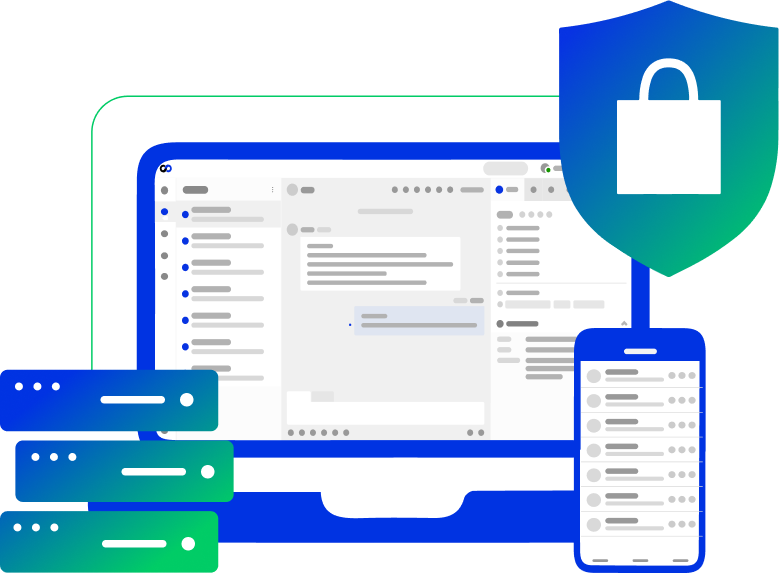
Keep Sensitive Customer Data Inside Your Environment
Deploy Comm100 Live Chat and AI Agent on your own infrastructure to maintain control over data residency, security policies, integrations, and platform upgrades.
Explore on-premises deploymentOn-Premises Deployment
Wait, Aren’t All Contact Center Software Providers Obligated to Offer SOC 2 Type II Compliant Live Chat?
The surprising answer is no.
SOC 2 Type II compliance is totally voluntary. Live chat software providers have other obligatory regulations to meet, especially if they partner with highly regulated industries (like HIPAA for healthcare organization) – like we do here at Comm100. Each compliance procedure is expensive and time consuming.
For some companies, it might not be a priority to go through voluntary compliance processes on top of that, or they might not have the resources. But you can’t afford to compromise on your company and customers’ most sensitive data.
How Can I Be Sure My Live Chat Provider Has Ticked Every Box for SOC 2 Type II Compliant Live Chat?
The honest answer is you can’t verify a SOC 2 Type II report from the outside. Most providers don’t post about it publicly, and you should always make sure to ask for documentation. Ask whether they hold a current Type II report, what period it covers, whether the AI features are inside the scope, and whether they’ll share it under NDA. A provider that handles regulated data well will have clear answers ready. At Comm100, we do.
Ready to Start Your Security Review?
Review the scope of Comm100’s SOC 2 Type II compliance and request the current audit report for your security, procurement, or vendor-risk assessment.
Request the SOC 2 reportSOC 2 Type II
SOC 2 Type II for Live Chat: Frequently Asked Questions
Is SOC 2 Type II the Same as Being HIPAA Compliant?
No. They cover different things. SOC 2 Type II proves a provider’s security controls operate effectively over time, across criteria like security, availability, and confidentiality. HIPAA is a US law governing protected health information specifically. A healthcare organization usually wants both: SOC 2 Type II for general security assurance, and HIPAA compliance for the patient data itself.
How Long Is a SOC 2 Type II Report Valid?
A report covers a defined window, usually 6 to 12 months, and is generally treated as current for about 12 months after its issue date. After that, the provider needs a fresh audit to show controls are still working. A report from three years ago tells you very little about today.
Can I See a Provider’s SOC 2 Type II Report Before I Buy?
Usually not without signing an NDA first. SOC 2 reports contain detailed information about a provider’s internal controls, so they’re shared under confidentiality, typically during procurement. A provider should be willing to share it with a serious prospect under NDA. One that won’t share it at all is worth a second look.
Does SOC 2 Type II Cover AI Chatbots and Automation?
Only if the audit’s scope includes them. SOC 2 scope is defined by the provider, so a report might cover the live chat platform but stop short of the AI features. If an AI Agent handles your customers’ sensitive data, ask specifically whether the automation falls inside the audited scope, not just the human-facing chat.
Is SOC 2 Type II Mandatory?
No, it’s voluntary. There’s no law requiring it. That’s exactly why it signals something: a provider chose to spend the time and money on a rigorous, ongoing audit when nothing forced them to.