

Your support team spends six weeks building a shortlist. Then the security team reviews the vendor responses, finds no current audit report and + Read More about the regulated-industry rfp checklist: vendor questions on security, compliance, and data residency

How Customer Support Determines Player Lifetime Value In iGaming
Most iGaming operators have spent the last few years buying customer relationship management (CRM) and customer data platform (CDP) software to fix retention. The pitch was consistent: identify high-value players, predict churn before it happens, trigger the right offer at the right moment. Plenty of operators made those investments and are now sitting on dashboards full of propensity scores and segmentation models.
What they often discover is that identification alone doesn’t move LTV the way the pitch suggested. A propensity model can flag a VIP who’s about to churn, but if that player then has a follow-up question and lands in a generic support queue at 3am, the model is decoration. The intervention failed at the support layer.
This piece is about the support side of the LTV equation. For the broader retention conversation across product, loyalty, and engagement, we’ve covered that ground in our 10 proven strategies for retaining iGaming players. This one focuses on what your support function does to make or break the LTV math.
What Support Interactions Disproportionately Affect Player LTV?
Not every support ticket carries the same weight. A handful of moments shape months of LTV in a single interaction, and treating them all the same is where operators bleed revenue.
The First Withdrawal
A new player who deposits and wins is asking themselves whether they’re actually going to see that money. If the withdrawal goes smoothly and any support contact gets handled in minutes, that player is on a different trajectory than one whose withdrawal sits in review for three days while messages go unanswered.
The first real interaction with your platform isn’t the deposit. It’s the first time they ask for their money back. Operators who treat the first withdrawal as a routine queue item are gambling with everything that comes after it. The player who gets a clean first withdrawal experience deposits a second time, then a third, and the spend curve builds. The one who doesn’t simply stops, often without ever explicitly churning. They just go quiet.
KYC and Verification Friction
Players hate this part, and many disengage permanently when verification stalls. A fast, human-handled escalation path through verification has direct LTV consequences because the alternative is silent abandonment. The deposit stays small, the second deposit never happens, and the CRM never sees a churn event to flag.
The friction is rarely caused by the KYC process itself. It’s caused by the support response when something goes wrong. A document gets rejected, the player doesn’t understand why, and the explanation sits in a queue. Two days of waiting for clarification on a simple ID upload is enough to lose a player whose lifetime value would have been substantial.
Deposit Failures and Payment Disputes
When a deposit fails, the player is mid-intention. They wanted to play, the platform got in the way, and now they’re frustrated in the exact moment they were ready to spend. Resolving this in real time keeps the session alive. Resolving it via email three hours later means the urge has passed and the player is doing something else.
This is one of the cleanest examples of why response speed has direct revenue consequences in iGaming. The deposit attempt itself was a signal of intent. The support response either converts that signal into revenue or lets it dissipate.
Bonus Disputes
Bonus terms are confusing on purpose. When a player feels misled or shortchanged, the support response sets the tone for everything that follows. A well-handled bonus dispute can turn a frustrated player into a long-term one because they walked away feeling heard. A dismissive one ends the relationship, and often spawns a negative review or social post on the way out.
The interaction matters more than the resolution. Players who feel they were taken seriously rarely stay angry, even when the operator’s interpretation of the terms turns out to be correct. Players who feel dismissed stay angry even when they win the dispute.
VIP Recognition on Inbound Contact
When a top-tier player reaches out and gets treated like a free-bet inquiry from a new sign-up, that’s an LTV mistake measurable in five or six figures depending on the player. Your big players will notice when they’re not recognized.
This isn’t about sycophancy. It’s about acknowledgment. A VIP who contacts support and gets routed to a generic queue with a generic greeting walks away with the impression that the operator doesn’t actually value them, regardless of what the loyalty program email says. The recognition has to happen on the support side, in real time, in the conversation itself.
Why Don’t CRM Investments Fully Translate into LTV Gains?
This is the question worth sitting with, because it explains why so many operators see diminishing returns on retention spend.
CRM platforms are excellent at identification. They tell you which player is at risk, what their spend curve looks like, when their last deposit was, and what offer they might respond to. The handoff problem starts immediately after that. The CRM sends a retention offer, the player has a question, and now the player is in a support queue.
If that queue treats every contact the same, the offer was wasted. The host who should be following up doesn’t know the player just got a personalized retention message. The agent who picks up the chat has no idea this is a high-value player with a churn flag. The follow-up gets handled adequately but not exceptionally, the offer never gets reinforced in conversation, and a week later the deposit frequency keeps falling.
The CRM did its job. The support function broke the chain. That’s the structural problem with treating CRM and support as separate budget lines.
How Does VIP-Tiered Support Routing Affect Lifetime Value?
The mechanics matter here, because there’s a wrong way to do this that we’ll address head-on in the next section.
The right approach protects the VIP lane. When a player contacts support, the system needs to know within seconds whether this is a VIP and what their context is. That means AI Agent identifying VIP status on inbound contact through CRM integration, routing the conversation to a named host or dedicated queue, and surfacing full player context to the human handling the conversation before they type their first reply.
The host walks in already knowing the player’s spend pattern, recent activity, last few tickets, current offer status, and outstanding issues. Not because they spent ten minutes digging through systems, but because AI Copilot prepared the brief.
Ultrabet, a bookmaker and online casino, took a version of this approach. They connected Comm100 Live Chat to their CRM so agents could see player spending patterns and history before engaging. Live chat became their most popular support channel as a result.
The economics get clearer when you remember that high-value players typically represent a small percentage of an operator’s base. Industry write-ups often put VIP players around the top 2% of players by lifetime value, with the exact figure varying by operator and product mix. Putting that small group through the same support funnel as everyone else means your most valuable players experience your worst service. There’s no version of those unit economics that works.
How Can Support Data Predict and Prevent Player Churn?
Support tickets are a leading indicator. Often a better one than the CRM gets to see.
The CRM watches deposit frequency, session length, and login patterns. Those are lagging signals. By the time deposit frequency drops, the player has already mentally checked out. Support tickets show the friction earlier. A VIP whose recent tickets shifted from bonus questions and game recommendations to withdrawal status and payment delays is signaling something the deposit data won’t reveal for another two weeks.
AI Insights surfaces those shifts at the cohort level. It looks across thousands of support interactions and shows the CX team where friction is concentrating, which player segments are showing rising support volume in churn-correlated categories, and where the topic mix is moving in concerning directions. That’s intelligence the CRM doesn’t have, because it isn’t sitting on the conversation data.
AI Copilot does the same work at the individual level for the host. Before the host responds to a VIP, Copilot has surfaced the relevant history, suggested context the host might want to acknowledge, and flagged anything in recent tickets that needs careful handling. In both cases, the AI is preparing the human, not replacing them.
How Does Support Automation Affect Both Cost-To-Serve and Lifetime Value?
This is where we need to be precise, because operator instincts and vendor pitches usually clash.
Our joint research with SBC Media made it clear that iGaming operators are deeply hesitant to use AI for VIP interactions. They prefer named human hosts, and they’re right to. VIPs expect relationships, not chat windows.
They expect the host to know them by name, remember the last conversation, and handle complaints personally. No bot delivers that, and operators who try to fake it tend to lose the players they were trying to retain. We’ve gone deeper into what the survey data revealed in our breakdown of the SBC and Comm100 iGaming customer support research.
The question isn’t whether to automate VIP support. It’s how to protect the host capacity that makes high-touch VIP service possible at scale.
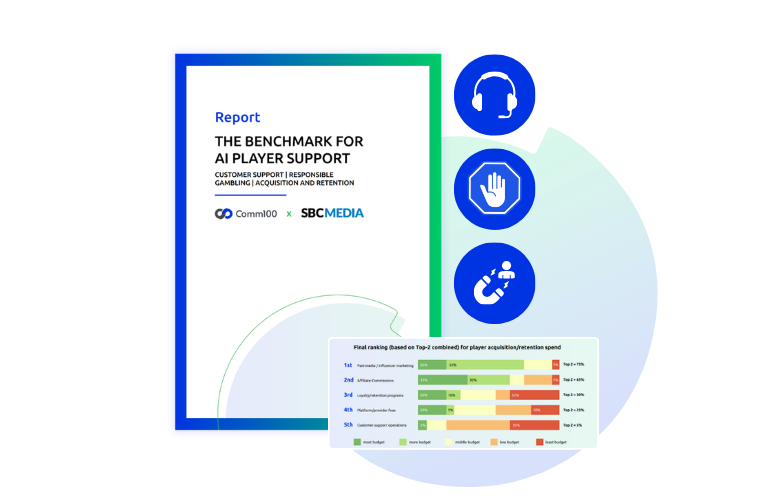
The Benchmark for AI Player Support
Explore what iGaming operators think about AI automation, VIP player support, human hosts, and the future of player experience.
Get the reportReport
What’s Clogging Host Queues Today
Most operators we talk to have hosts buried in tickets that shouldn’t be touching them in the first place. The usual list:
- Password resets
- Bonus terms explanations
- Account verification status checks
- Balance inquiries
- Game rule clarifications
These low-value, high-volume queries crowd out the time hosts need for building relationships with the players they’re paid to protect. A host who spends half their day on password resets has half a day less for the VIP conversation that actually moves LTV.
Where AI Agent Earns Its Keep
Routine queries get deflected, resolved instantly, and never touch the host queue. The high volume of inbound that doesn’t require relationship-based handling stops competing for the same minutes that should go to the small percentage of players who drive most of the revenue.
We’ve broken down what AI deflection looks like in practice in how much AI reduces customer service agent workload, and the underlying support ROI math is covered in how to calculate the ROI of live chat and AI chatbots. The numbers vary by operator, but the directional story is consistent: deflecting routine queries doesn’t just lower cost-to-serve, it reallocates host attention to interactions where attention actually compounds revenue.
The reframe matters. AI isn’t replacing the host. AI is what makes the host model affordable as the player base grows. Without it, operators face a binary choice: hire more hosts than the unit economics support, or let VIP service quality degrade as you scale. Neither option grows LTV.
How Do KYC and Responsible Gaming Controls In Support Affect Lifetime Value?
This one is less obvious, and it’s where the compliance and the LTV team’s interests actually converge.
Most operators treat KYC and responsible gaming as compliance overhead. They’re also LTV protection, for two reasons.
Early Intervention Prevents Downstream Catastrophe
Problem gambling identified early in support interactions and routed to appropriate intervention prevents a chain of expensive consequences. The player who would have generated a chargeback, a regulatory complaint, a fine, or a viral negative story instead gets cooling-off support and either continues as a healthy player or exits cleanly. The trade-off between a flagged conversation handled correctly and a regulatory fine isn’t subtle, and neither is the trade-off between a quiet de-escalation and a public complaint that affects acquisition for the next six months.
Trust Compounds in Cohort LTV
The trust this builds with regulators and with healthy players adds up over time. Operators known for responsible practices retain players longer because players feel safer on those platforms. That shows up in cohort LTV, not in the quarter where you deployed the control, which is part of why so many operators undervalue it. The benefit is real but it lags.
The Infrastructure Layer
The technical piece matters too. iGaming support handles some of the most sensitive data outside of healthcare and banking. Player KYC documents, payment information, account credentials, and transaction histories all flow through the support system in some form.
What Does a LTV-focused Support Operation Actually Look Like?
Strip this back to the operational picture, and an iGaming support function built for LTV has five distinct characteristics.
1. AI Handles the Routine Front Line
Password resets, bonus terms, account questions, game rules, and balance checks all get answered by AI Agent on the first touch. The volume that currently overwhelms host queues gets deflected at the door, freeing the human team for the interactions that actually justify a human.
2. VIPs Get Identified Before the Conversation Starts
The system knows who this player is, what their value is, and what their recent history looks like the moment they reach out. VIPs get routed to named hosts, not to bots. The identification happens at the routing layer, not after the agent has already typed a generic greeting.
3. Hosts Are Prepped Before They Engage
AI Copilot surfaces context for the host before the conversation begins. The host doesn’t dig through three systems looking for the player’s last deposit. They walk in informed and respond in the player’s voice, with the full history already visible.
4. Support Data Flows Back Into the CRM
The CRM isn’t just feeding tags to support. Support is feeding signals back: topic shifts, sentiment changes, and friction concentrations. The two systems work as one revenue function, with each side getting smarter from what the other sees.
5. SLAs Are Tiered by Player Value
The VIP with a billing question doesn’t wait behind the new sign-up asking about welcome bonuses. That’s not unfair treatment, it’s how the unit economics work. Tiering SLAs by player value is just acknowledging out loud what the revenue numbers already say.
When conversations cross channels or sessions, solutions like the Comm100 Ticketing & Messaging layer hold it together so that the host who picks up tomorrow has every previous interaction visible.
The Bottom Line
CRM platforms tell you who matters. Support determines what actually happens when those players reach out, and whether the marketing investment converts into revenue. Operators who treat these as one system rather than two budget lines are the ones whose LTV curves keep climbing while others plateau.
AI’s role here isn’t to replace the human relationships that VIP players pay for and expect. It’s to clear the runway so those relationships are actually possible at scale. AI deflects the noise, prepares the host, surfaces the signals, and stays out of the conversations that need to stay human.
For operator-specific evaluation criteria on AI in iGaming, our breakdown of the best AI chatbots for gaming goes deeper. And if retention is the broader question on your desk, the 10 proven strategies for retaining iGaming players piece covers the wider product and loyalty conversation around the support layer.

Deliver VIP iGaming Support at Scale with Comm100
See how Comm100 helps iGaming operators combine AI automation with personalized VIP support to improve retention and player lifetime value.
Request a demo todayRequest Demo
Frequently Asked Questions
What customer support strategies improve player lifetime value for iGaming operators?
The customer support strategies that move player lifetime value in iGaming aren’t generic CX best practices. They’re built around the specific support moments where LTV is decided: the first withdrawal, KYC and verification escalations, deposit failures, bonus disputes, and VIP recognition on inbound contact. Operators who structure their support function around these moments, route VIPs to named human hosts with full context surfaced before the conversation starts, and use AI to deflect routine queries (password resets, balance checks, game rules) so hosts have capacity for relationship-based work tend to see stronger LTV outcomes than those who treat all support contacts the same way.
Should iGaming operators use AI for VIP customer support?
No, and the operators we talk to are clear about this. Joint research from Comm100 and SBC Media found that iGaming operators are hesitant to use AI for VIP interactions because high-value players expect named human hosts who recognize them, remember the last conversation, and handle complaints personally. The right role for AI in VIP support is indirect: AI Agent deflects the high volume of routine, non-VIP queries that currently clog host queues, and AI Copilot prepares the host with full player context before they engage. The human handles the VIP conversation. AI handles everything around it that protects the host’s time.
Why don’t CRM and CDP investments fully translate into iGaming LTV gains?
CRM and CDP platforms are excellent at identifying which players matter and predicting churn, but identification is only half the equation. The other half is execution at the support layer. When a CRM flags a VIP and triggers a retention offer, the player often has a follow-up question that lands in a generic support queue. If the agent has no visibility into the player’s value, recent activity, or churn flag, the retention offer never gets reinforced in conversation, and the intervention fails. The CRM did its job. Support broke the chain. Operators who see plateauing returns on retention spend almost always have this handoff problem.
How does VIP-tiered support routing affect player lifetime value?
VIP-tiered routing protects player lifetime value by ensuring that high-value players are identified the moment they contact support and routed to a named host with their full context already surfaced. The host walks in knowing the player’s spend pattern, recent activity, current offer status, and outstanding issues, rather than spending the first ten minutes of the conversation searching across systems. Industry write-ups commonly put whales around the top 2% of an operator’s player base by lifetime value. Putting that small group through the same support funnel as new sign-ups means your most valuable players experience your worst service, which is a measurable LTV mistake.
Can support data predict player churn earlier than CRM data?
Yes, in many cases support data is a leading indicator of churn while CRM data is a lagging one. CRMs watch deposit frequency, session length, and login patterns, but by the time those metrics shift, the player has often already mentally disengaged. Support ticket data shifts earlier. A VIP whose recent tickets moved from bonus questions and game recommendations to withdrawal status and payment delays is signaling friction the deposit data won’t reveal for another two weeks. AI Insights surfaces these shifts at the cohort level so CX teams can intervene before the CRM sees the drop.
How do KYC and responsible gambling controls in support affect lifetime value?
KYC and responsible gambling controls are usually treated as compliance overhead, but they’re also LTV protection. Problem gambling identified early in support interactions and routed to appropriate intervention prevents downstream costs like chargebacks, regulatory complaints, fines, and reputation damage that affects acquisition for months afterward. The trust this builds with regulators and with healthy players also shows up in cohort LTV over time, since players feel safer on platforms known for responsible practices and stay longer as a result. The infrastructure layer matters too, because support handles some of the most sensitive data in iGaming (KYC documents, payment information, account credentials), and breaches at the support vendor level have direct LTV consequences.