
For organizations in regulated industries such as finance, government, healthcare and higher education, choosing a customer support platform is a high-stakes decision. Freshdesk + Read More about top freshdesk competitors that are soc 2 type ii and pci dss ready

Top-Rated AI-Powered Support Software for Telecommunications
Telecom support teams handle a heavy load of billing questions, technical issues, and outage updates, often while competitors work hard to win their customers away. A traditional, agent-only service model struggles to keep up with that demand, which is why more providers are moving to a people-first, AI-powered, digital-first approach to customer experience. This guide explains how to evaluate the best customer service platforms for telecom companies and what to look for so your investment pays off.
Why AI Matters in Telecommunications Support
Few industries stand to gain as much from AI support as telecom. Providers field a constant stream of repetitive but important questions about billing, plan changes, and service status, and customers expect answers around the clock. Handling all of this with human agents alone is slow and expensive: a fully human-handled resolution costs $8–$15 per interaction.
Today’s AI does much more than answer FAQs. It can work through the multi-step resolutions telecom customers often need. Automation can resolve up to 80% of routine inquiries, leaving agents free to handle the complex conversations that build loyalty. Getting there starts with a careful look at what the best AI customer service software and tools can offer.
What to Look for in an AI Support Platform for Telecom
When comparing the top-rated customer support software solutions for telecommunications businesses, look past the feature lists. Three capabilities matter most: connecting conversations across channels, automating complex workflows, and helping agents do their best work.
Omnichannel Experience Orchestration
Customers expect one ongoing conversation, whichever channel they use. An omnichannel platform brings live chat, SMS, WhatsApp, and social media into a single thread. Here’s a simple test to run during a demo: start an inquiry in web chat, then try to pick it up by SMS on your phone. If the context and history don’t carry over, the platform isn’t truly omnichannel. Behind the scenes, an AI-powered ticketing and messaging system keeps the thread intact, so customers never have to repeat themselves.
Intelligent Automation for Complex Telecom Workflows
A strong AI platform should complete tasks, not just answer questions. Start by listing your three to five highest-volume request types, such as balance checks, plan upgrades, or technician appointments. Then ask each vendor to show exactly how their platform would automate those workflows. Look for visual, no-code workflow builders that let your support team build and adjust automations without waiting on developers.
AI-Human Collaboration That Improves Agent Performance
The best results come from a people-first, AI-powered approach, where AI works alongside your agents rather than replacing them. Judge the AI by how much it helps agents work faster. An AI Copilot, for example, can cut ramp-up time for new agents by 30–40% by suggesting answers in real time.
The handoff from AI to a human agent deserves close attention. Track customer satisfaction after escalations to see how well it works. A well-designed handoff can reach a CSAT score of 92.6%, a sign that customers barely notice the transition.
The ROI of AI-Powered Support
The business case for AI support is easy to measure. To build an internal proposal, use your current operational data as a baseline and project the impact using industry benchmarks.
Lower Operational Costs
Cost savings show up quickly. Companies that use AI for customer service typically cut costs by 15–40% in the first year. The gap in resolution costs explains why: a fully automated interaction costs $0.50–$2, compared with $8–$15 for one handled entirely by a person. Most organizations see measurable ROI within 3–6 months of deployment and a full return in 9–15 months.
More Agent Capacity and Productivity
When AI handles common inquiries, agents have more time for complex work. Leading platforms can automate up to 80% of inbound queries. Industry data backs this up: agent workload has fallen 5.8% year over year as more companies adopt AI-powered live chat. For a team of 20 agents, the recovered time can be worth $67,300–$75,400 a year.
Stronger Customer Loyalty and Lifetime Value
Better service also drives growth. Faster, more accurate answers, available at any hour, raise satisfaction and reduce churn, which matters in a market where customers can switch providers easily. For an organization with 10,000 customers, cutting churn by just 1.5 percentage points can save $75,000 in revenue each quarter.
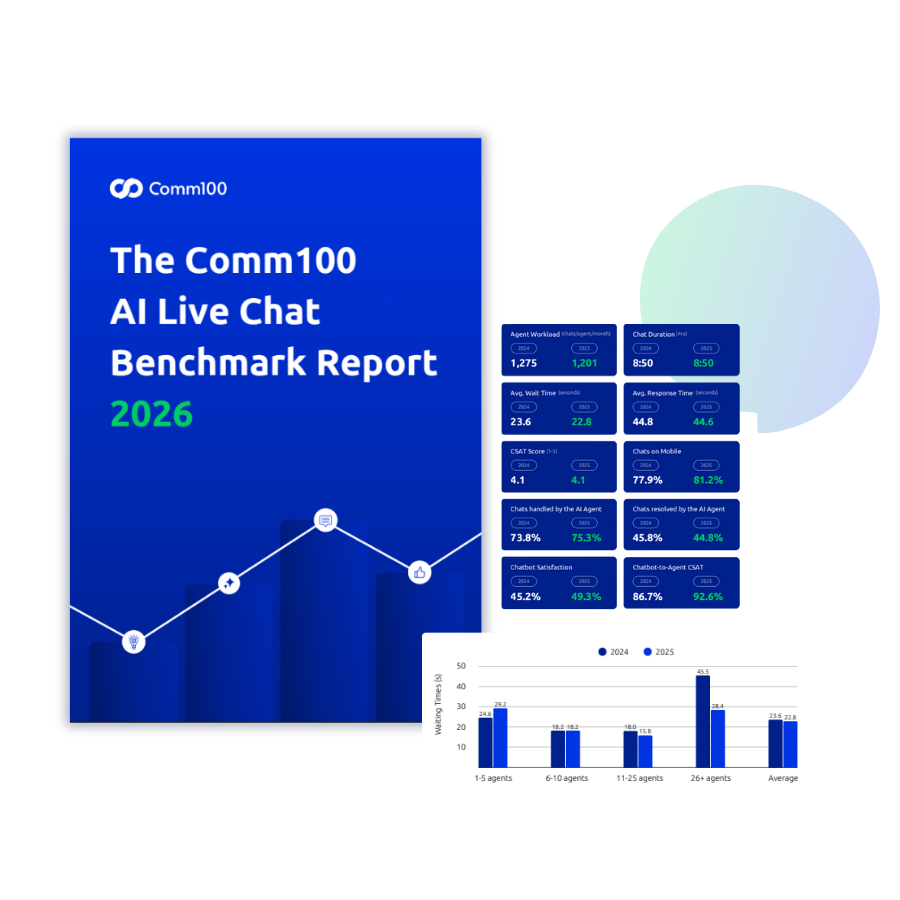
2026 AI Live Chat Benchmarks
See AI handling, handoff satisfaction, and agent workload benchmarks from more than 220 million chats.
Get the reportReport
A Closer Look at Comm100
It helps to see these capabilities in a working product. The Comm100 platform shows how they come together in practice, backed by more than 15 years of experience building customer service technology for regulated industries.
Automation and Conversational Intelligence
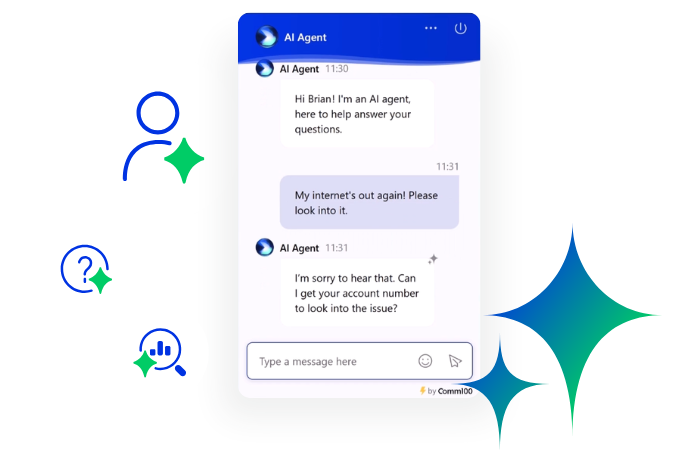
Real-world performance is the best measure of a platform. The Comm100 AI Agent automates up to 80% of inquiries and currently handles 75.3% of all incoming chats across its user base. Deployment requires no code and can take as little as two hours. The AI Agent draws on an organization’s existing knowledge sources to give accurate, context-aware answers in natural language, which supports reliable omnichannel customer engagement for telecom and utilities.
Enterprise-Grade Security and Compliance
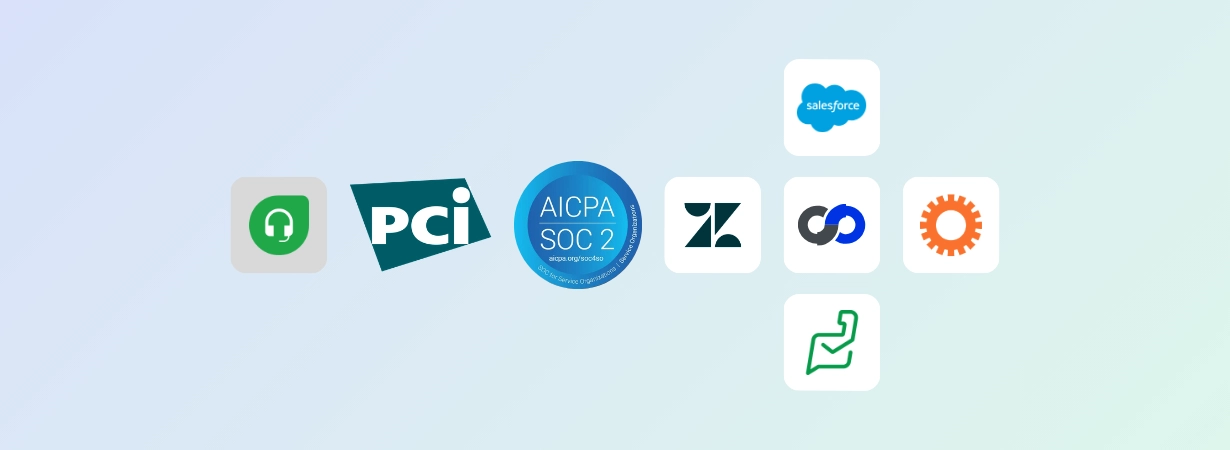
Telecom providers handle sensitive customer and payment data, so security and compliance need to be built into any support platform they choose. Comm100 was built for this environment and holds certifications for ISO 27001, SOC 2 Type II, PCI DSS, GDPR, PIPEDA, and HIPAA. For organizations with strict data governance policies, an on-premise deployment option adds another layer of control.
The right AI-powered support software can change how a telecom provider competes. Look for a platform that connects every channel into one conversation, automates complex workflows, and helps agents do their best work. Focus on those capabilities, insist on a clear path to ROI, and customer service can start contributing to growth and loyalty instead of just adding cost.
Want to see how AI-powered customer service could work for your telecom team? Contact Comm100 for a personalized demo.

See Comm100 for Telecom
Explore AI Agent, omnichannel support, and deployment options for your telecom team.
Request demoRequest Demo