







Improve trust and loyalty by delivering clear answers when and where stakeholders and policyholders need them

Reduce support effort and costs with a unified platform that keeps agents efficient during peak volumes

Maintain consistency across channels and teams with a single system of record for every customer interaction

Scale with confidence while maintaining compliance with strict insurance regulations
Your customers reach out at moments that matter: filing a claim, buying or updating a policy, or seeking clarity during stressful situations. Comm100 helps you deliver fast, accurate, and human-centered service across every digital channel without compromising security or compliance.
“We don’t live in a patient world. Our clients expect answers immediately – they don’t want to wait for a response on email or wait in a telephone queue. With live chat we can provide them with this support. They ask us a question, get the answer they need within minutes, and get on with their day.”
– Rita Morris, Producer Resource Center Manager at Sagicor Life
A Complete Customer Support Platform for the Insurance Sector
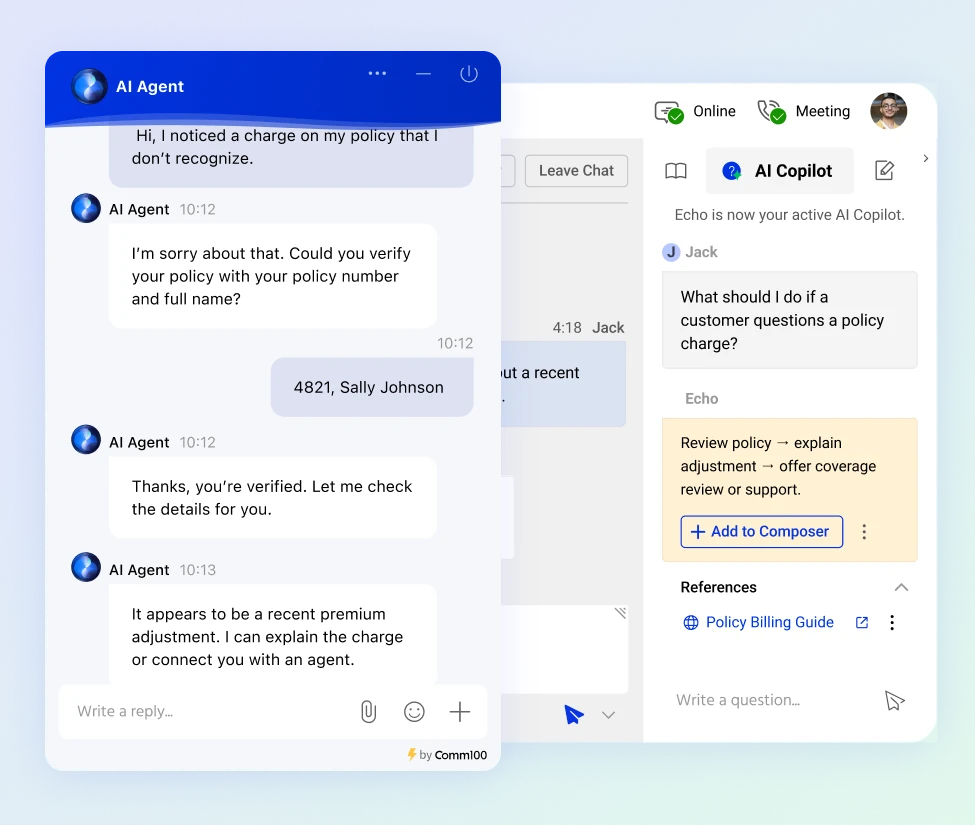
Live Chat
Comm100 Live Chat enables real-time conversations between policyholders and trained agents. Go beyond simple messaging with voice, video, secure file sharing, and screen sharing to resolve claims issues, policy questions, and documentation faster.
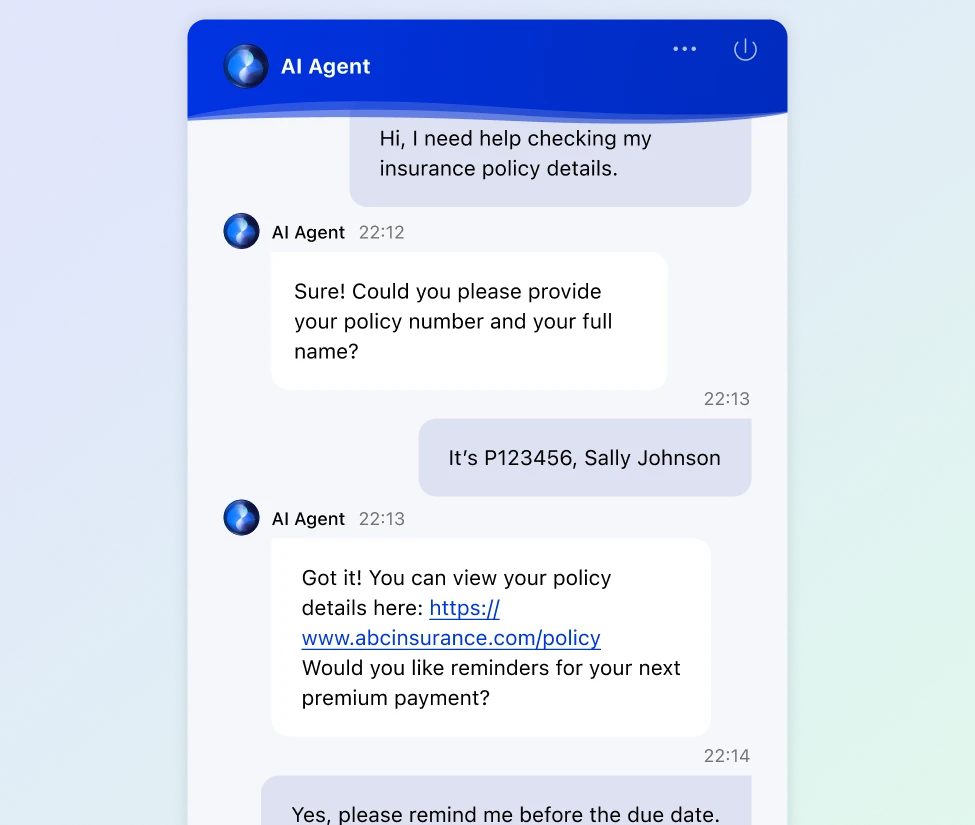
AI Agent
Handle routine, high-volume insurance inquiries automatically while keeping human agents focused on complex, high-stakes cases. AI Agent supports policyholders with fast, accurate responses 24/7 and seamlessly hands off to live agents when personal assistance is required.
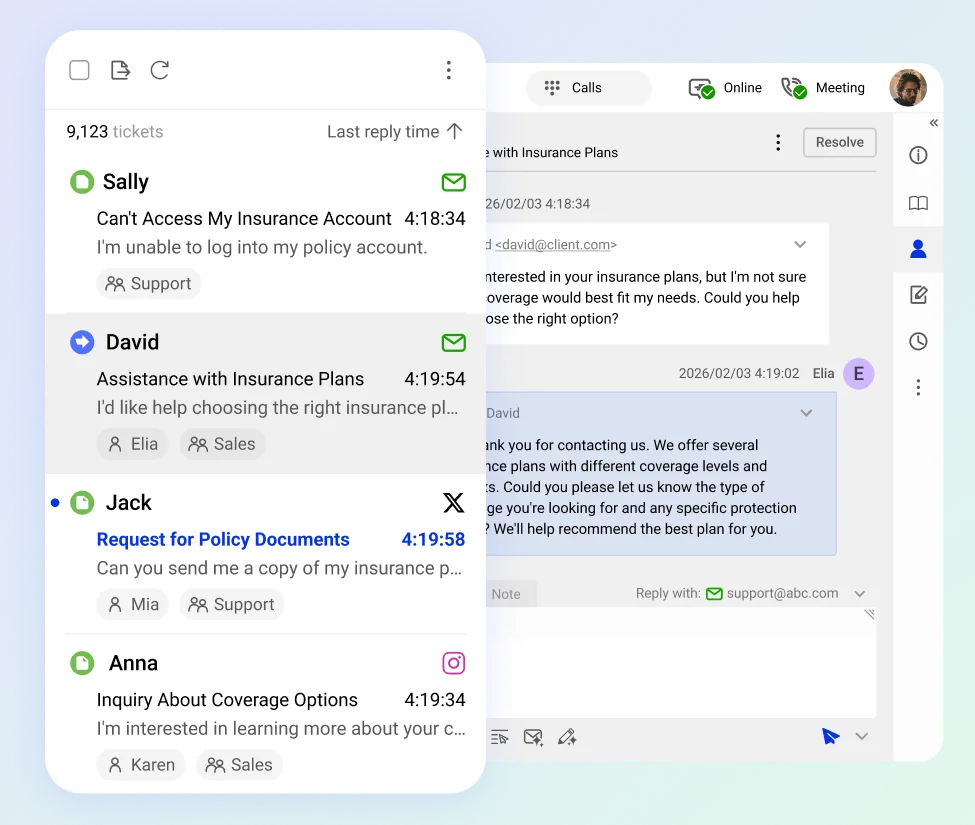
Ticketing & Messaging
Manage inquiries from email, SMS, and social channels in one easy-to-use system. Keep every customer conversation organized, tracked, and routed to the right team for faster resolution.
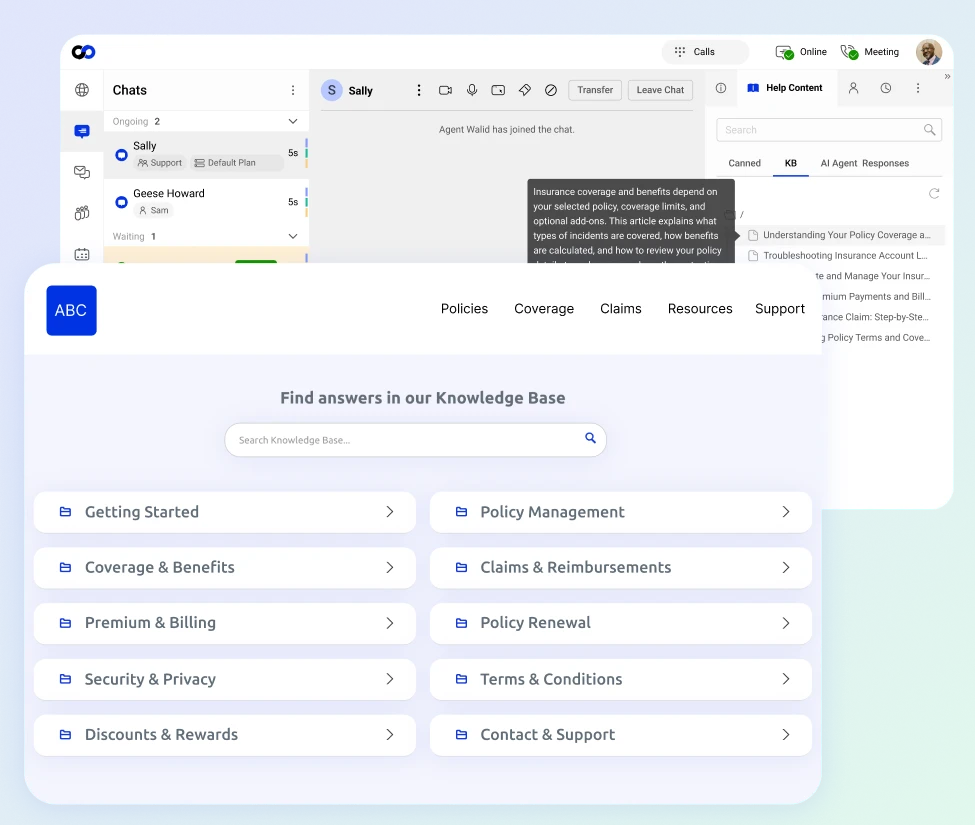
Knowledge Base
Build and maintain centralized knowledge bases that support both self-service customers and agents. Ensure consistent, accurate answers across policies, coverage, and claims.
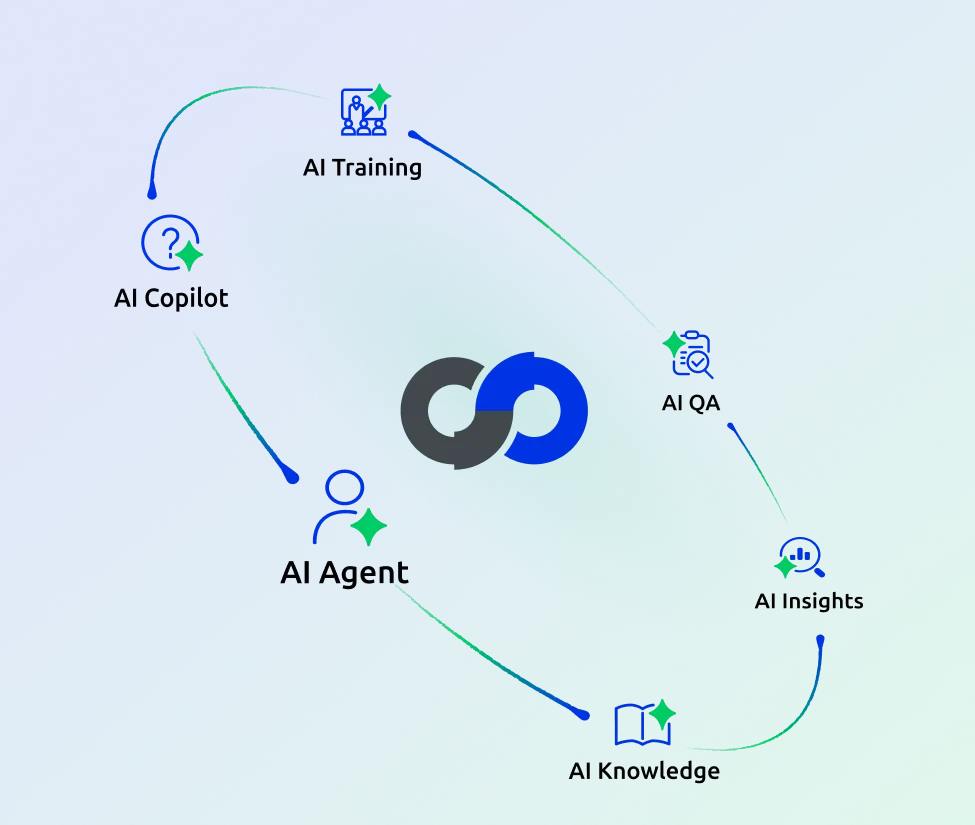
AI Flywheel
Comm100's AI capabilities extend well beyond the table-stakes AI agent you expect. Our solutions span the entire support lifecycle, from building and managing your knowledge resources to training your staff to upholding quality standards in the trenches.
“Comm100 Live Chat has transformed how we support our agencies. With up to 400 calls a day, our clients were often put on hold for a considerable time before an agent became available. Now with live chat in place, we can instantly respond to every incoming query and give our clients the immediate support they expect.”
– Scott Eckstein, Insurance Sales Expert at Sagicor Life
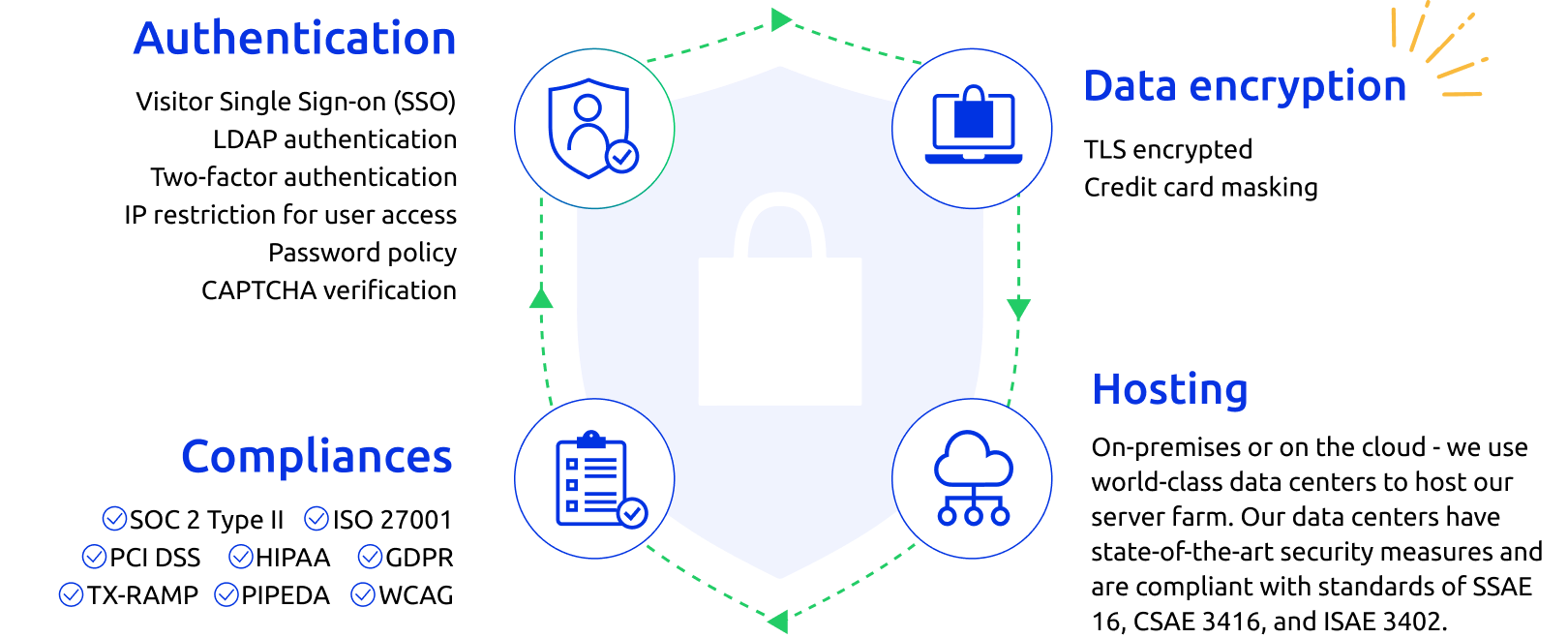
Uncompromising Security & Compliance
We exceed insurance sector security & compliance requirements to keep your data secure and your business safe.
Insurance underwriters, brokers, and agencies worldwide rely on Comm100 to reduce wait times, improve service quality, and deliver dependable digital support without increasing operational complexity.
Frequently Asked Questions
Why does customer service quality matter so much in insurance?
Insurance is one of the few industries where customers pay for something they hope they’ll never use. The relationship between policyholder and insurer is built almost entirely on trust, and most of that trust is established (or destroyed) during service interactions. A policyholder who can’t get a clear answer about their coverage, who waits 20 minutes on hold to report a claim, or who gets bounced between departments without resolution doesn’t just have a bad experience. They start shopping for a new provider.
Retention is where the financial impact concentrates. Acquiring a new policyholder costs significantly more than retaining an existing one, and lapsed policies represent both lost premium revenue and wasted acquisition spend. The service experience directly influences renewal decisions. A policyholder who had their claim handled quickly and clearly is far more likely to renew than one who struggled to reach someone when they needed help.
The competitive angle matters too. Insurance products are often similar in coverage and price. When the policy terms look the same across three providers, the deciding factor for many customers is which company is easiest to work with. Speed, accuracy, and accessibility in customer service become the differentiators that pricing and coverage can’t provide.
How can AI reduce costs and improve response speed for insurance customer service?
A large portion of insurance inquiries are repetitive and predictable. Policy status checks, premium payment questions, coverage explanations, claims status updates, document submission procedures, and ID card requests show up over and over. These questions have documented answers, and they don’t require an agent’s judgment to resolve.
An AI Agent trained on the insurer’s policy documentation, FAQ content, and procedural guides can handle these queries without human involvement. The policyholder gets an instant answer. The agent never sees the conversation. Multiply that across thousands of interactions per month, and the cost-per-interaction math changes significantly. Agents spend their time on the conversations that actually need them: complex claims, coverage disputes, policy changes with financial implications, and situations where the customer is upset and needs a person.
The availability dimension matters as much as cost. Policyholders don’t schedule their emergencies during business hours. A car accident at 11 PM, a pipe burst on a Sunday morning, a theft discovered during a holiday weekend. AI provides 24/7 coverage so policyholders can start a claim, check their coverage, or get procedural guidance at any hour. The insurer that’s available at the moment of crisis builds more trust than the one that sends the call to voicemail.
What security and compliance standards should insurance companies require from support platforms?
Insurance companies handle sensitive personal data: Social Security numbers, health information, financial records, claims details, and payment card data. Any platform used for customer communication needs to protect that information at the same level the insurer protects it internally.
PCI DSS compliance is required whenever the platform might handle payment card information. If a policyholder shares a card number during a chat to make a premium payment, the platform must mask that data and transmit it securely.
SOC 2 Type II certification validates that the vendor’s security controls around data handling, availability, and confidentiality have been independently audited. For insurance IT teams, SOC 2 is a non-negotiable baseline when any vendor touches customer data.
How does Comm100's live chat work for insurance companies?
Comm100’s live chat gives insurance agents the full range of communication tools within a single window: real-time text messaging, voice chat, video chat, file sharing, and screen sharing. Agents can talk a policyholder through a claims form over video, share a policy document within the chat, or use screen sharing to walk someone through the online portal.
Rita Morris, Producer Resource Center Manager at Sagicor Life, put it this way: “Our clients expect answers immediately. They don’t want to wait for a response on email or wait in a telephone queue. With live chat we can provide them with this support. They ask us a question, get the answer they need within minutes, and get on with their day.”
Proactive chat invitations trigger when visitors show interest-based behavior on the website: spending time on a quotes page, browsing plan comparison content, or starting and abandoning an application form. These triggers start a conversation at the moment of highest intent, connecting the visitor with an agent who can move them toward a purchase or answer the question that’s holding them back.